

Hans Fallada
Stages in Hans Fallada’s life
1893–1922 · Childhood and youth
-
1893
- Rudolf Ditzen is born in Greifswald on 21 July, the third of four children of district court judge Wilhelm Ditzen and his wife Elisabeth.
-
1899
- His father is transferred to the Prussian Supreme Court (Kammergericht) in Berlin, and the family moves to the city.
- Rudolf attends the Prinz-Heinrich-Gymnasium in Berlin-Schöneberg.
-
From 1906
- Attends the Bismarck-Gymnasium in Berlin-Wilmersdorf.
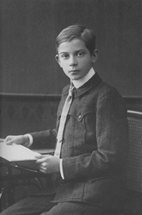
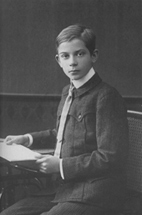
Rudolf Ditzen, around 1906. -
1909
- His father is appointed a judge at the Reichsgericht (Imperial Supreme Court).
- The family moves to Leipzig.
- Rudolf attends the Königin-Carola-Gymnasium.
-
1911
- Attends the Fürstliches Gymnasium in Rudolstadt.
- A “duel” with his schoolfriend Hanns Dietrich von Necker ends with von Necker’s death.
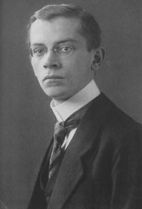
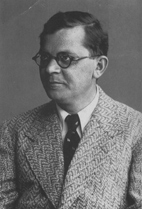
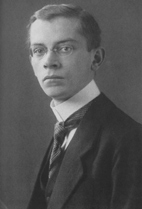
Rudolf Ditzen, around 1911. -
1912
- Admitted to the psychiatric hospital in Tannenfeld, Saxony.
- Placed in the care of his aunt Adelaide Ditzen.
-
1913
- Agricultural trainee on an estate in Posterstein, Thuringia.
-
1914
- Volunteers for military service and serves for eleven days with the military transport corps in Leipzig.
-
1916
- Assistant at the Chamber of Agriculture in Stettin; research assistant at a potato-growing association in Berlin.
-
1917
- Undergoes treatment for drug addiction in Carlsfeld near Halle.
- Works as an accounts clerk on various estates.
-
1919
- Works as a freelance writer in Berlin.
- Completes his first novel, “Der junge Goedeschal”.
- Stays at the Baumgarten manor estate near Dramburg in Pomerania.
- Undergoes addiction treatment in Tannenfeld.
-
1920
- “Der junge Goedeschal” is published by Rowohlt.
- Undergoes addiction treatment in Carlsfeld and Rinteln an der Weser.
- Works as an estate accounts clerk in Marzdorf, West Prussia.
-
1921
- Patient at the Pomeranian Provincial Mental Hospital in Stralsund.
- Lives and works in locations between Rostock, Stralsund and Rügen.
-
1922
- Works near Bad Doberan in Mecklenburg.
- Estate accounts manager at Neu Schönfeld in Lower Silesia.
- Works in Marzdorf, West Prussia.
- Stays in Gudderitz on Rügen.
From 1923 · Writer and family man
-
1923
- Novel “Anton und Gerda”.
- Stays in Gudderitz on Rügen.
- Estate accounts manager at the Radach manor near Drossen.
- Works as a bookkeeper in the grain trade in Drossen, Neumark.
-
1924
- Drossen.
- Imprisoned in Greifswald.
- Stays in Gudderitz on Rügen.
-
1925
- Accounts clerk in Lübgust, Pomerania.
- Estate accounts manager in Neuhaus near Lütjenburg, Holstein.
- Imprisoned in Neumünster.
-
1928
- Becomes engaged to Anna Margarete Issel.
- Works as an address clerk in Hamburg.
-
1929
- Marries Anna Margarete Issel on 5 April.
- Works as an advertising canvasser and local-news editor for the “General-Anzeiger” in Neumünster.
-
1930
- Employee of the Rowohlt publishing house in Berlin.
- His son Ulrich is born on 14 March.
- Moves to Neuenhagen near Berlin.
-
1931
- Novel “Bauern, Bonzen und Bomben” (“A Small Circus”).
-
1932
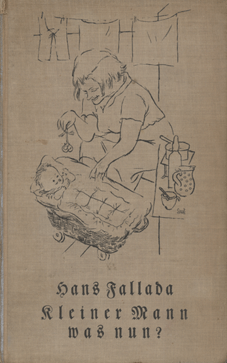
- International success of the novel “Kleiner Mann – was nun?” (“Little Man, What Now?”).
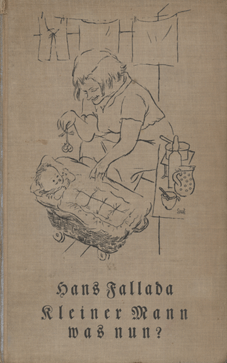
“Kleiner Mann – was nun?” (“Little Man, What Now?”), 1932. -
1933
- Moves to Berkenbrück.
- Arrested by the SA and detained for eleven days in Fürstenwalde.
- His daughter Lore is born on 18 July.
- Buys a house in Carwitz near Feldberg.
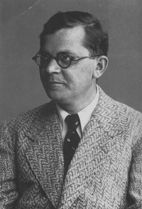
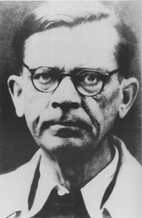
Hans Fallada, around 1933. -
1934
- Novels “Wer einmal aus dem Blechnapf frißt” (“Once a Jailbird”) and “Wir hatten mal ein Kind” (“Once We Had a Child”).
-
1935
- Novel “Das Märchen vom Stadtschreiber, der aufs Land flog” (“Sparrow Farm”).
-
1937
- Novel “Wolf unter Wölfen” (“Wolf Among Wolves”).
- His father dies on 14 April.
-
1938
- Novel “Der eiserne Gustav” (“Iron Gustav”).
-
1940
- Novel “Der ungeliebte Mann” (“The Unloved Man”).
- His third child, Achim, is born on 3 April.
-
1943
- Novel “Ein Mann will hinauf” (“A Man Wants to Move Up”).
- Travels to France with the Reich Labour Service.
-
1944
- Divorces Anna Ditzen on 5 July.
- Meets Ursula Losch.
- Compulsorily committed to the state psychiatric institution in Strelitz.
- Writes the manuscript of “Der Trinker” (“The Drinker”).
-
1945
- Marries Ursula Losch on 1 February.
- Appointed mayor of Feldberg.
- Moves to Berlin.
- Meets Johannes R. Becher.
- Works as a freelance contributor to the “Tägliche Rundschau”.
-
1946
- Writes the novels “Der Alpdruck” (“The Nightmare”) and “Jeder stirbt für sich allein” (“Alone in Berlin”).
- Admitted to the psychiatric clinic at Berlin’s Charité hospital.
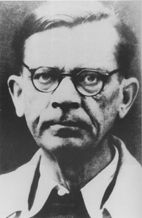
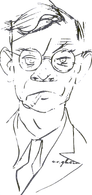
Hans Fallada, around 1946. -
1947
- Dies of heart failure on 5 February in Berlin-Niederschönhausen.